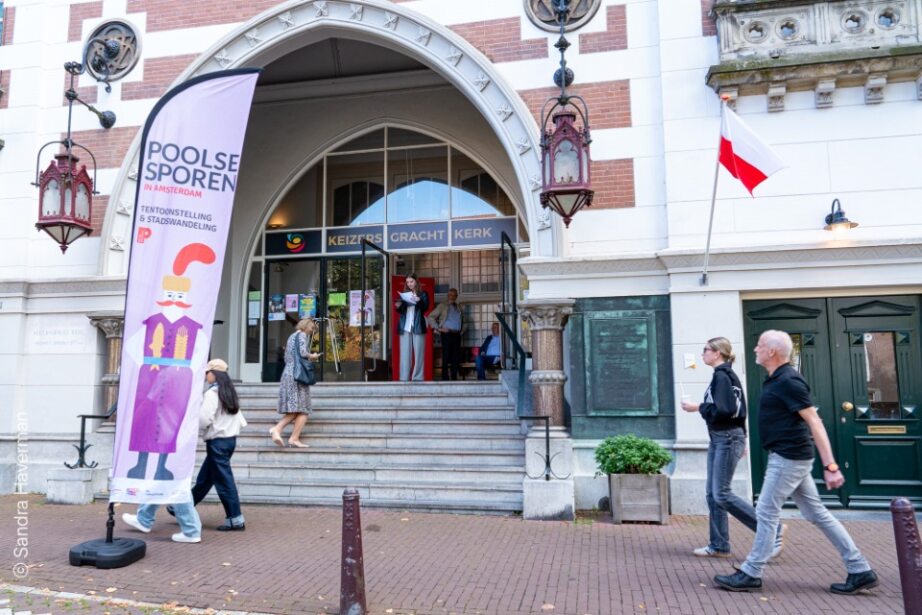
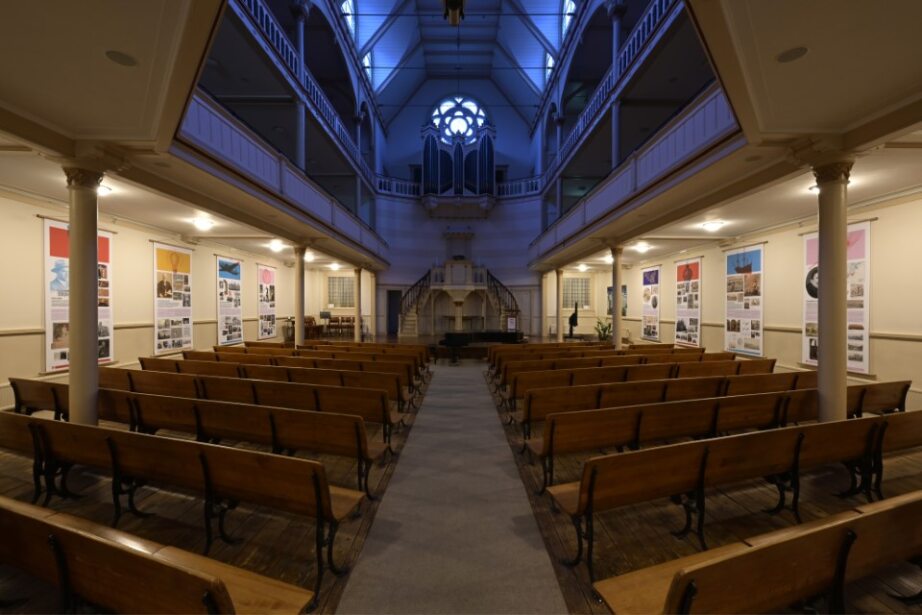
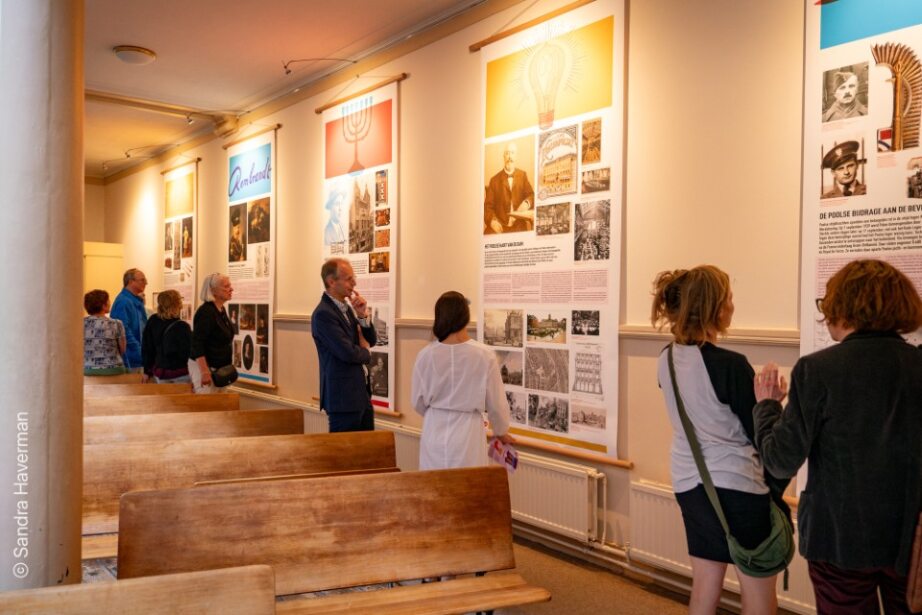
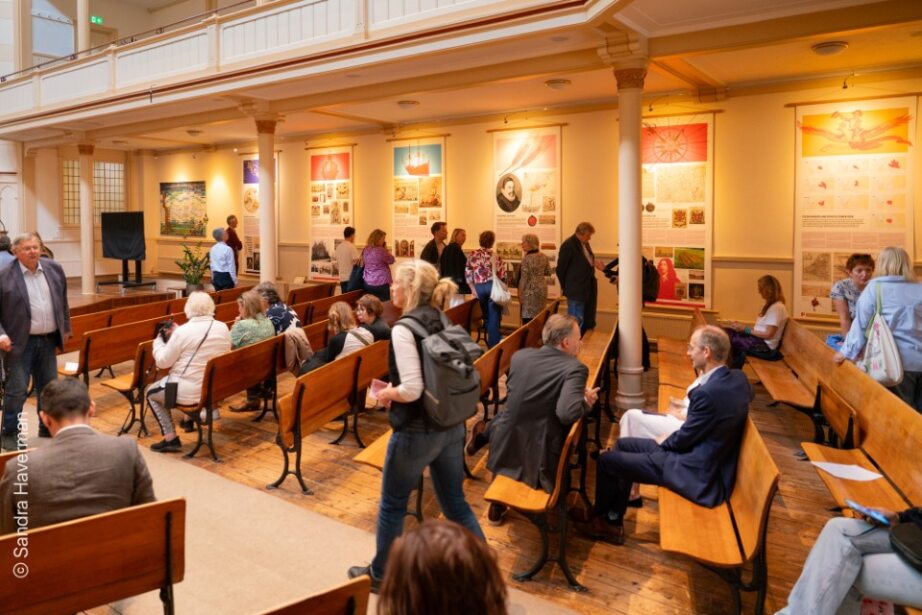
The exhibition Polish Traces in Amsterdamwas presented at Keizersgrachkerk from 31st August to 28thSeptember 2025 and was included in a series of events celebrating the 750th anniversary of Amsterdam. Its aim was to broaden knowledge about the history of Poles in the Netherlands, to remind of the close historical ties between Poland and the Netherlands in culture, science, trade and technology, and finally, to show how many threads of Amsterdam’s history are intertwined with Poles and Poland
The exhibition consisted of 12 panels, each dealing with a different aspect of Polish-Dutch history, such as the history of trade, mutual influences in architecture or the lives of newcomers from Poland who significantly impacted the development of the city. The panels featured illustrations and text in Dutch. The same information could be read in Polish and English in the catalogue available on site.
Photo: Eddy Wenting
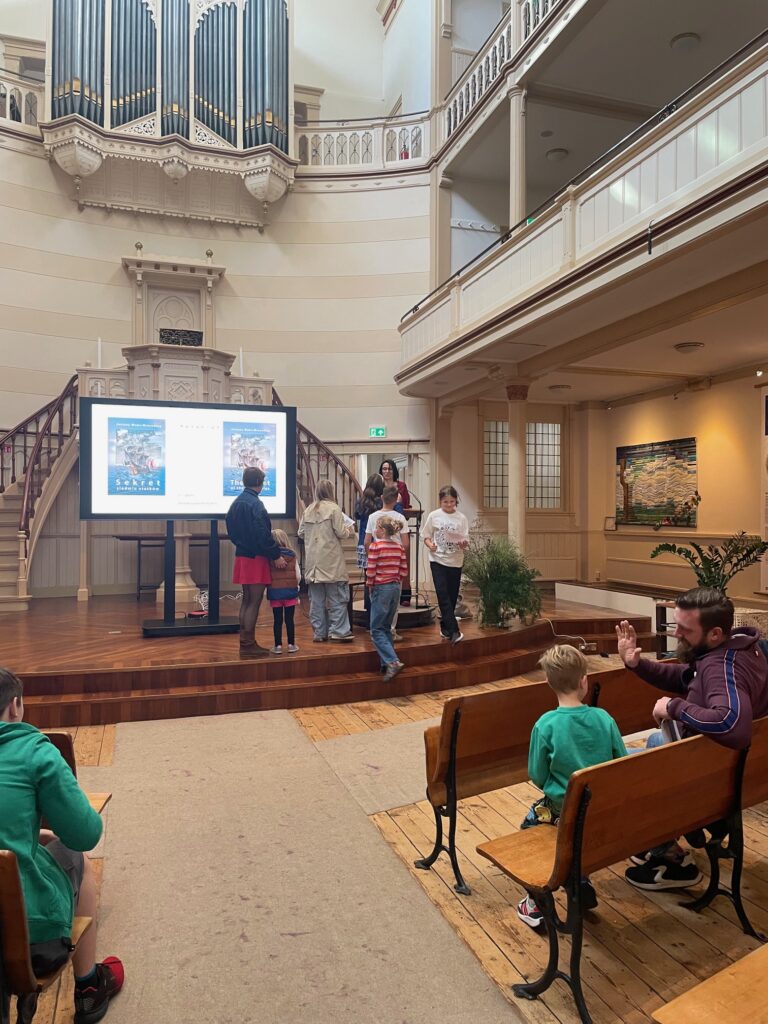
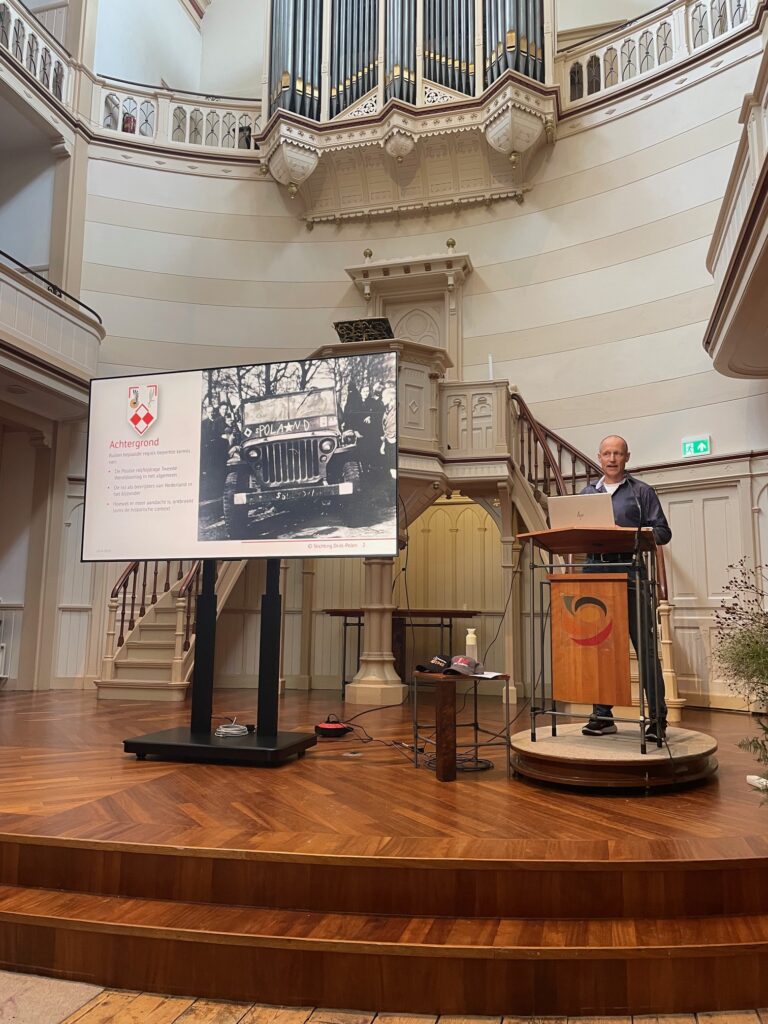
Two interesting presentations were held during the exhibition at Keizersgracht. One, addressed to children, was an account of the relations between Gdańsk and Amsterdam in the 17th century, based on Justyna Wubs-Mroziewicz’s book The Secret of Seven Ships and delivered by the author. The second, edited with older audiences in mind, presented the history of Polish participation in the liberation of the Netherlands from Nazi occupation.
The exhibition was visited by Dutch, Polish, and representatives of other nationalities, often young people with Polish roots, interested in Polish history and heritage. Thanks to the exhibition being available in three languages, we were able to reach a larger audience.
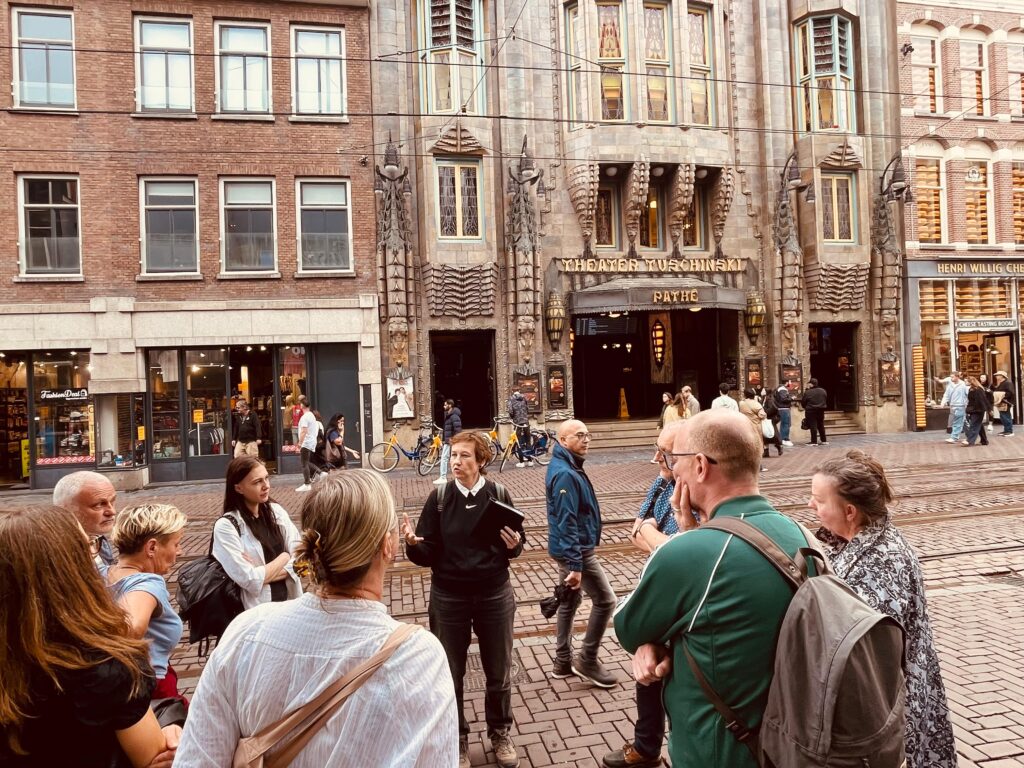
During the exhibition, we also organised city walks following the tangible traces of Polish history in Amsterdam. The walks were very popular with the audience and attended by 150 people. As a multicultural city where newcomers have settled both in the past and at present, Amsterdam has many visible traces left by immigrants from Poland. Their history is particularly rich and worth to be put During the exhibition at Keizersgracht in the spotlight.
We are convinced that the exhibition, thanks to the considerable reach we have achieved, has deepened the knowledge of Polish history and culture and made the residents of Amsterdam aware of the Polish traces in their city.
The exhibition Polish Traces in Amsterdam, organized in the framework of Amsterdam’s 750th anniversary, was made possible primarily through the generous support of Stichting Amsterdam 750, Keizersgrachtkerk, en het Cultuurfonds. With financial support from the Polish Embassy in Den Haag and the Polish Tourist Office.
We use cookies on our website to give you the most relevant experience by remembering your preferences and repeat visits. By clicking “Accept”, you consent to the use of ALL the cookies.
This website uses cookies to improve your experience while you navigate through the website. Out of these, the cookies that are categorized as necessary are stored on your browser as they are essential for the working of basic functionalities of the website. We also use third-party cookies that help us analyze and understand how you use this website. These cookies will be stored in your browser only with your consent. You also have the option to opt-out of these cookies. But opting out of some of these cookies may affect your browsing experience.
Necessary cookies are absolutely essential for the website to function properly. This category only includes cookies that ensures basic functionalities and security features of the website. These cookies do not store any personal information.
Any cookies that may not be particularly necessary for the website to function and is used specifically to collect user personal data via analytics, ads, other embedded contents are termed as non-necessary cookies. It is mandatory to procure user consent prior to running these cookies on your website.