May 9, 2026 · 7:30 PM, De Balie · Amsterdam, Tickets
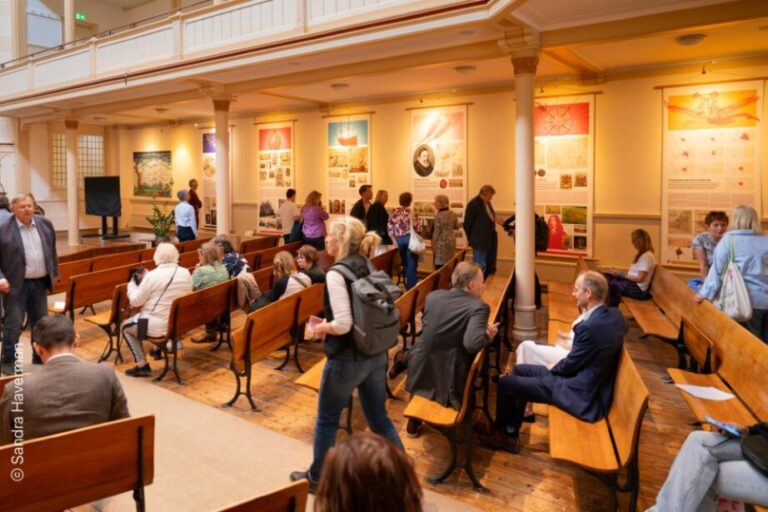
European Literature Night is an annual event organised by EUNIC Netherlands (European Union National Institutes for Culture) in collaboration with de Balie and partners, including the Polish Culture NL foundation. This year, it is scheduled for 9th May.
The occasion creates a space for dialogue, the exchange of views and reflection on the role of literature in contemporary Europe. It also highlights trends and issues emerging in the works of contemporary European authors.
The theme of this year’s ELN is Transformation, understood as a process of constant change that necessitates a reinterpretation of familiar myths, fairy tales and traditions in the face of the current geopolitical situation and living conditions. A parallel theme will be the relationship between the human world dominated by technology and the world of nature.
And since this is a literary evening, the theme of Transformation will also relate to the issue of translating poetry and prose. After all, it is thanks to translations that we can discover texts written in other languages and cultures.
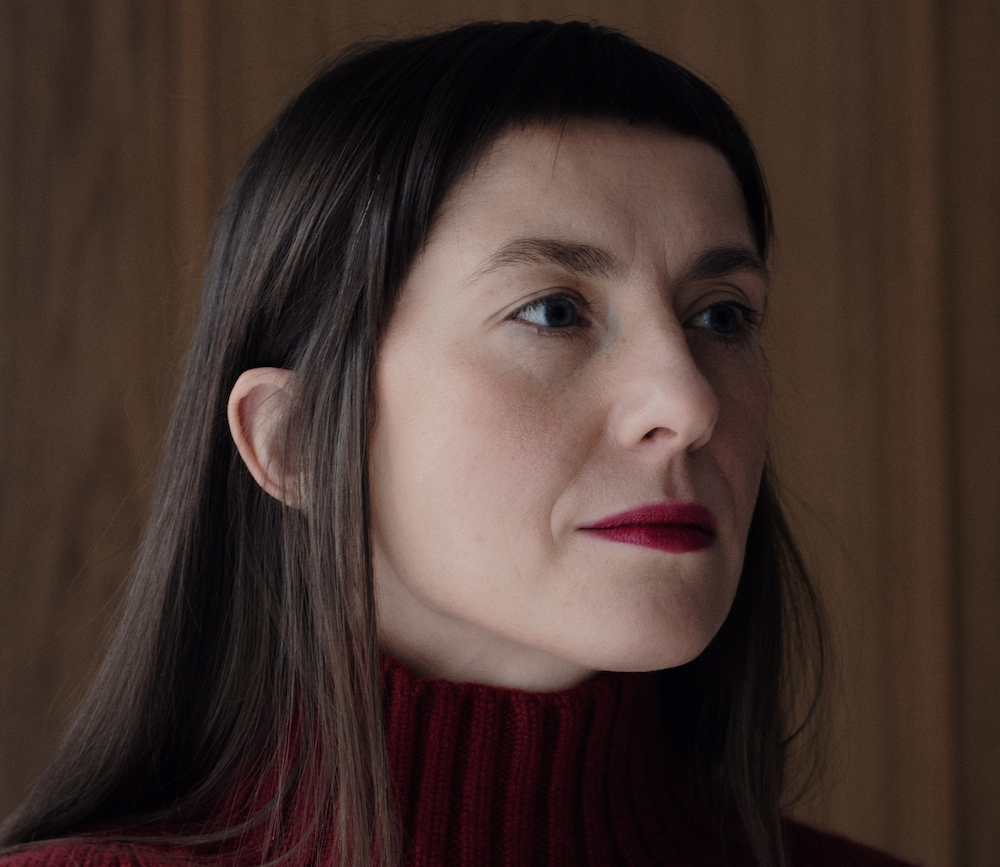
Six European authors from Poland, Germany, Estonia, Ukraine, Romania and Greece have been invited to take part in the discussion. At the invitation of the Polish Culture NL foundation, which is co-organising the ELN for the second time, the Polish poet and writer Małgorzata Lebda will be taking part in the evening’s event.
Who is she?
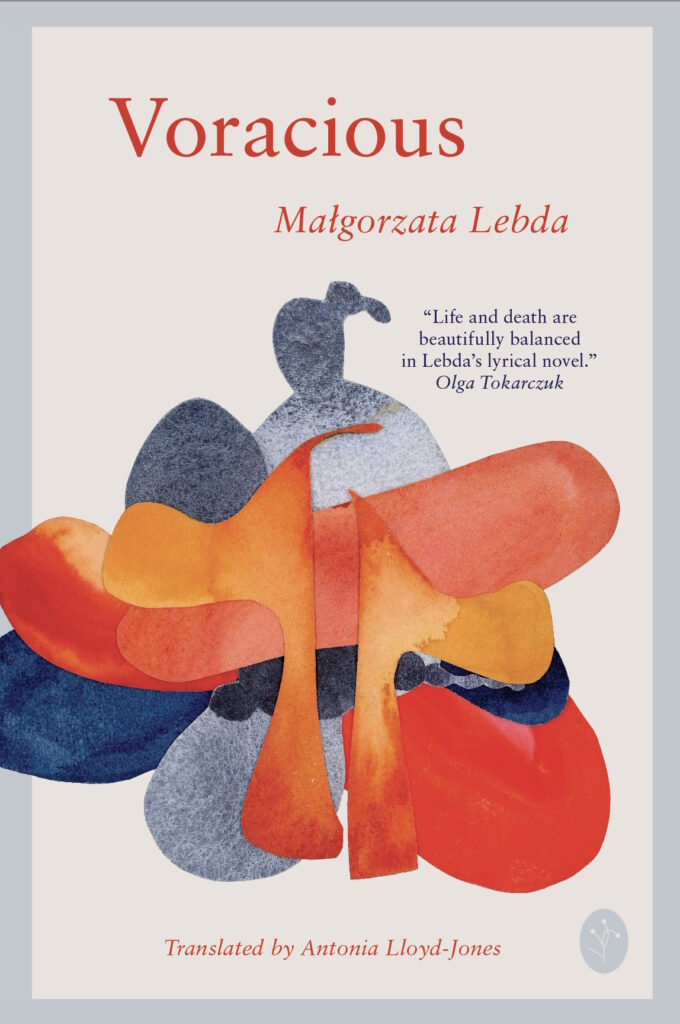
Małgorzata Lebda holds a PhD in the humanities and is a lecturer at the Jagiellonian University in Kraków. She is an ultramarathon runner (and the creator of the sporting, activist and poetic project ‘Reading the Water’, during which she ran 1,113 km along the Vistula). Until recently, she was known primarily as a poet. Her poetry often explores the close connections between the human world and the natural world, addressing issues of memory, identity, transience and corporeality. It also highlights how our immediate surroundings and the landscape shape our lives and the way we experience them. She has received numerous awards, including the Gdynia Literary Award for her collection Uckermӓrkers’ Dreams (2019) and the Wisława Szymborska Award for Mer de Glace (2021). This collection, translated by Mira Rosenthal will be published later this year in English, by Fitzcarraldo Editions. Her latest poetry collection, Dunaj. Sloping Fields (2025), received the Kościelski Foundation Award. In 2023, she made her debut as a prose writer. Her novel Voracious, published at that time, has just been translated into Dutch by Charlotte Pothuizen and will be available in Dutch bookshops this May, published by Koppernik publishing house.
Roots
The author grew up in a small village in the Beskid Sądecki mountains. She describes herself as a devoted child of this place. It is therefore no surprise that nature, its rhythm, generosity, but also its cruelty, are a source of inspiration for the writer, which fits perfectly with the theme of this year’s ELN. After all, it is nature, whose inherent characteristic is constant change, that teaches us to see value in transition.
About herself
Lebda’s writing is largely autobiographical. In both her poetry and prose, she draws on personal experiences. Voracious is an account of accompanying someone through a terminal illness and their passing, based on the author’s own experiences of caring for her mother during the final months of her life. I wanted to describe the grief that arises even before the loss, says Małgorzata Lebda. The inevitability of this loss and the poignant awareness of limited time foster a great greed for life in all its manifestations. However, this is not a hedonistic greed, characterised by destruction. It is an affirmative greed, full of wonder for the smallest creatures and the most every day, ordinary matters, yet devoid of naivety. For there is also room in it for what is ugly and frightening. Such a vision of the finitude of individual existence is not easy but incorporating it into the chain of transformation offers consolation and a sense of belonging to the great phenomenon of Life.
It is worth mentioning that a film of the same title, based on the book Voracious, is currently in production, directed by Jagoda Szelc, whom the Polish Culture NL foundation hosted last year as part of the Amsterdam Polish Film Festival (the fourth edition, ‘Female Voices’, dedicated to the work of contemporary Polish female directors APFF 2025 ). The film is set to premiere next year.
Małgorzata Lebda’s books have already been translated into English, Czech, Danish, French, Spanish, Romanian, Serbian, Slovenian and Ukrainian. Work on further translations is underway.
Her essay Transformation: A Movement Towards the New will be published in this year’s edition of Common Ground.
Monika Gimblett