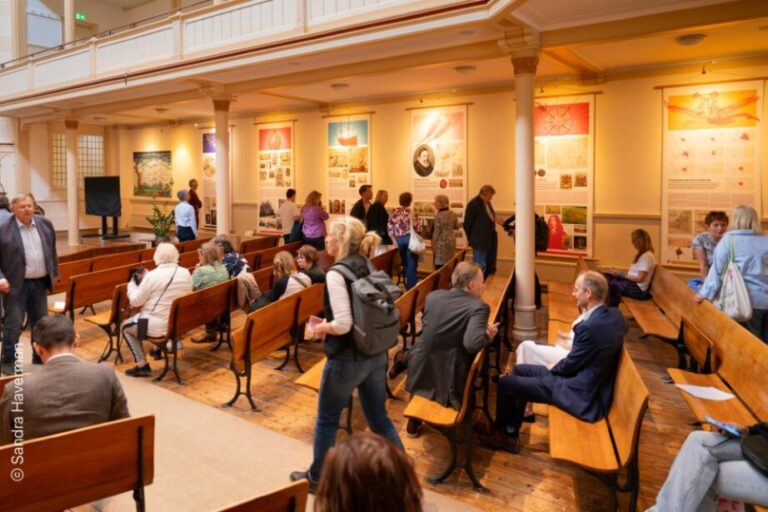
This year, for the second time, our foundation co-organised European Literature Night. The event took place on 9TH May 2026 at de Balie. The choice of date was no coincidence, as it happens to be a Europe Day. The annual gathering of European authors is organised under the auspices of EUNIC (European Union National Institutes of Culture).
This time, the theme of the meeting was Transformation, broadly understood as the processes of profound geopolitical, social and cultural change currently being experienced by the European continent. There was also reflection on the role of literature in transforming ethical attitudes and worldviews.
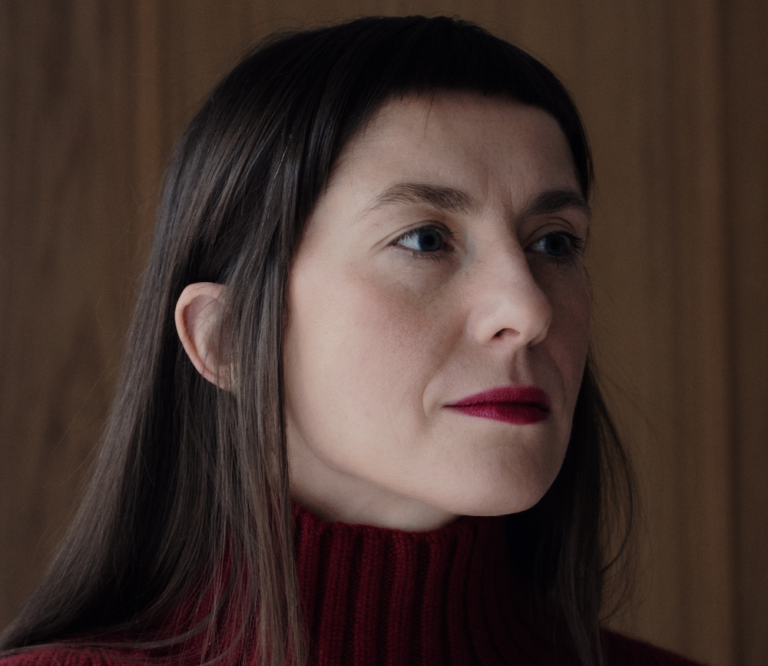
At the invitation of the Polish Culture NL foundation, the evening was attended by Małgorzata Lebda, a Polish poet and writer and winner of numerous prestigious literary awards, whose novel Voracious, translated by Charlotte Pothuizen, has just been published by Koppernik editing house and is now available in Dutch bookshops.
In addition to Małgorzata Lebda, authors from Estonia, Greece, Germany, Romania and Ukraine were invited.
The Romanian writer and poet, Iulian Bocai was the first to read his essay Fast History, Slow Fiction. The text sparked a discussion on the role of literature in describing past and current events. Alongside the author, Małgorzata Lebda and the German writer born in Ukraine, Dimitrij Kapitelman, took part in the discussion. The conclusion featured a reflection on the role of literature, particularly prose, in relation to current events. Whilst poetry, as a concise form, has the potential to comment on reality as it unfolds, the novel always reaches its audience after some time has passed. In this sense, literature always follows history; it cannot run parallel to it and cannot comment on it in real time.
Unfortunately, the Greek writer, Amanda Michalopoulou, was unable to attend the event. The essay Princess on the Water was read by the translator of her works, Eveline Mineur. The essay demonstrates just how much the idea of Europe has changed over the past few decades. And not only that; the writer aptly observed that the meaning of words is also changing in a dangerous way. Every totalitarian system is rooted in simplistic language and flawed dichotomies […] Words like ‘homeland’, ‘bother’, ‘borders’, ‘woman’, ‘exile’, ‘reproduction’, ‘evil’, ‘nation’ have been […] stolen again by creepy governments and narcissistic individuals. Writers today do not just write books. They fight to get words (and their meanings) back – writes Michalopoulou.
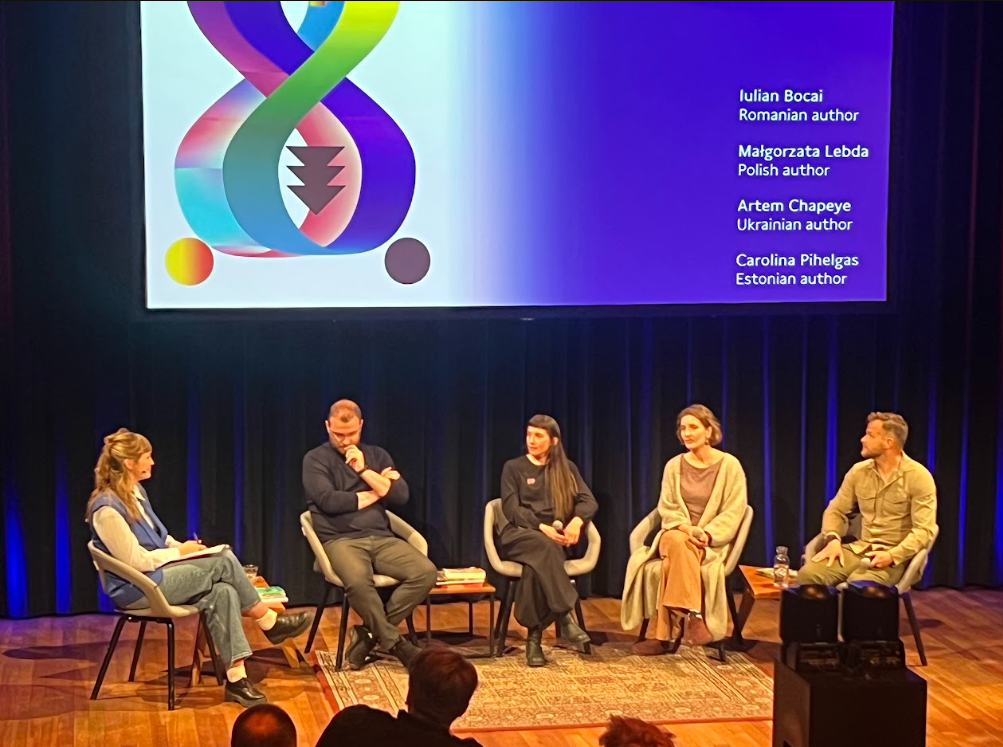
The discussion then turned to the subject of translation. Joining the conversation were Artem Chapeye, a Ukrainian writer, translator, reporter and traveller, currently serving in the Ukrainian army fighting against Russian aggression, and Carolina Pihelgas, a writer, poet and translator from Estonia. The speakers, drawing on their experience as translators and having had their own works translated by others, agreed that the author and the translator form a team, and that texts appearing in translation have not one but two authors.
Małgorzata Lebda’s essay, Transformation. A Movement Towards the New, fitted perfectly into this discussion. The author writes that to be translated into another language is to be accepted and welcomed into another culture, and that the power of the message multiplies with each successive translation. She also noted that authors and translators are often bound by deep friendships. Thanks to translators, literature written in the languages of smaller populations has the chance to become globally accessible.
Service in the Ukrainian army prevented Artem Chapeye from writing an essay, but in an interview, he explained what transformation means for him and for his country. Chapeye went from being a civilian to a soldier, and Ukraine went from being one of the European countries where life revolved around everyday matters to becoming a victim of Russian aggression. His latest book describing these experiences, Ordinary People Don’t Carry Machine Guns, has just been published in the Netherlands.
Carolina Pihelgas’s essay was a perfect commentary on Artem’s story. When wars unfold, they inevitably seep into our personal lives, becoming part of our individual crises, writes Carolina, emphasising the need for solidarity with Ukraine, despite our weariness with news of yet more bombings. This is particularly important in the face of narratives referring to neo-fascism or the helplessness of governments in the face of acts of genocide.
Dimitrij Kapitelman lives in Germany. In his essay Victories from the Russian Spam Folder, he refers to the resurgence of neo-fascist sympathies there. He also draws attention to the Russian propaganda narrative that aligns with this trend, which perpetuates divisions and tensions based on worldviews even within families – a situation the author has experienced personally. In his view, this makes it even more important to build bridges and foster dialogue between people of differing beliefs.
This year’s edition of ELN succeeded in addressing important and topical issues in contemporary European literature, from the perspective of both the writer and the ordinary European. Selected topics, event guests and discussions were very warmly received, as evidenced by the higher attendance than in previous years, as well as the engagement and spontaneous reactions of the audience.