Amsterdam Polish Film Festival 2026 – ENG

Amsterdam Polish Film Festival 2026

Andrzej Wajda. Past, Present, Possible | 22.10 – 1.11.2026 | De Balie

The 5th edition of the Amsterdam Polish Film Festival is dedicated to Andrzej Wajda, an outstanding Polish director and an Oscar winner in 2000 for his lifetime achievement.

By presenting some of his phenomenal work we join the celebration of Wajda’s Year, marking 100th anniversary of his birth and 10th of him passing away. While deeply rooted in Polish culture his films demonstrate that national stories could address universal questions and influence filmmakers worldwide until today.

This year’s extended festival programme continues into a second weekend. On 1 November 2026, we invite you to a special showcase of documentary films by emerging filmmakers from the Wajda School, reflecting the enduring influence of Andrzej Wajda’s artistic vision and cinematic legacy.

The festival is accompanied by an exhibition of posters created for Andrzej Wajda’s films, featuring works by some of Poland’s most celebrated graphic artists (from the collection of the Museum of Cinematography in Łódź). The exhibition will be on view at De Balie from 3 October to 2 November 2026.
Program | Films & Talks

Thursday October 22
Echoes of the Past

19.00 – 19.10  
Introduction to Wajda and the festival by Rafał Syska

19.10 – 20.40 
Innocent Sorcerers
(1960, 87 min)

20.45 – 21.15
 Conversation: Andrzej Wajda: The man behind the films
Guest: Prof. Rafał Syska
Moderator: Stefan Malešević

Friday October 23
The price of Progress

18.30 – 20.45  
 The Promised Land
(1975, 138 min restored)

21.00 – 21.45
Conversation: Factories of Desire: The Promised Land in 21st century
Guests: Prof. Rafał Syska, Hugo Emmerzael
Moderator: Stefan Malešević

Saturday October 24
Memory, Truth, Freedom

14.30 – 17.15  
Man of Marble
(1976, 165 min)

18.30 – 19.15
Conversation: Reflections on propaganda and truth  
Guests: Katarzyna Ślesicka, Prof. Kris van Heuckelom
Moderator: Ianthe Mosselman

19.30 – 21.45  
Man of Iron
(1981, 157 min)

Sunday October 25
Art Against Oppression

14.30 – 16.30
Afterimage
(2016, 122 min)

16.45 – 17.30
Conversation: A clash between art and politics 
Guests: Anda Rottenberg, Matt Steinglass
Moderator: Ianthe Mosselman

Exhibition | 3 October – 2 November

Andrzej Wajda: Cinema in Posters

The festival will be accompanied by an exhibition of posters for Andrzej Wajda’s films. The exhibition can be viewed at the De Balie from 3rd October to 2nd November 2026. On display there will be 30 works by the finest Polish graphic artists: Jan Lenica, Roman Cieślewicz, Waldemar Świerzy, Franciszek Starowieyski, Marcin Mroszczak, Wojciech Fangor, to name but a few.

Day 1 - Echoes of the Past

Introduction

What shaped Andrzej Wajda’s artistic sensitivity? Why do the shots in his films resemble paintings? How did he understand and portray the experiences of his generation? And what did he wish to convey telling the stories of people whose fates are intertwined with the grand narrative of history? All of this and more will be explained by prof. Rafał Syska.

Guest: Prof. Rafał Syska is a film historian and professor at the Institute of Audiovisual Arts at the Jagiellonian University in Kraków, where he specialises in contemporary cinema. He is the author of several books, including published studies on Robert Altman, Theo Angelopoulos and Andrzej Wajda. He founded and for many years edited the film magazine EKRANy and curated the widely acclaimed ‘Wajda’ exhibition at the National Museum in Kraków, Tokyo and Düsseldorf. Until 2025, he was the head of the National Centre for Film Culture in Łódź.

Film: Innocent Sorcerers

Niewinni_Czarodzieje_02_gallery

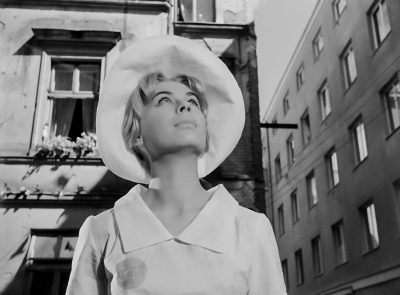
Set over the course of a single night in postwar Warsaw, Innocent Sorcerers follows Bazyli, a young doctor and a jazz enthusiast who’s carefully cultivated detachment is challenged after a chance encounter with an enigmatic young woman. What begins as a flirtatious game of invented identities gradually becomes an intimate exploration of vulnerability, desire, and the uncertainty of genuine relationship. Blending the energy of Poland’s emerging youth culture with emotional depth, Andrzej Wajda’s 1960 film captures a generation experiencing freedom, modernity, and loneliness. Stylish, witty, and quietly subversive, Innocent Sorcerers remains one of the best portraits of Polish postwar urban youth.

Conversation: Andrzej Wajda: The man behind the films

Guest: Prof. Rafał Syska
Moderator: Stefan Malešević

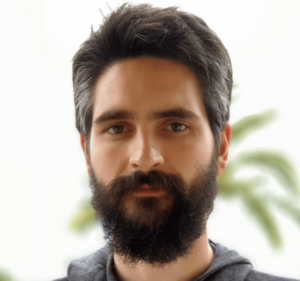
Stefan Malešević is a filmmaker and film curator from Serbia, currently living in the Netherlands. He studied filmmaking at the film.factory academy in Sarajevo, Bosnia, under the mentorship of Béla Tarr. His documentary film Gora (2016) was awarded at Beldocs and DokuFest and screened at Visions du Réel. His first fiction feature film Mamonga (2019) premiered in Karlovy Vary, screened at New Horizons in Wrocław, Marrakech International Film Festival and several other festivals. He is a member of the European Film Academy since 2019 and works as the Head of Cinema in the cultural centre De Balie, Amsterdam.

Day 2 - The Price of Progress

Film: The Promised Land

What was it like to live in a rapidly industrializing city of Łódź at the end of the nineteenth century? The Promised Land is a story of three ambitious friends – a Pole, a German, and a Jew, who join forces to build a textile factory and pursue wealth in a world driven by ruthless capitalism. With breathtaking visual dynamism, Andrzej Wajda transforms Władysław Reymont’s celebrated novel into a powerful picture of industrial modernity, class conflict, and the allure of success. Widely regarded as one of Wajda’s greatest achievements, The Promised Land remains strikingly relevant today.

Conversation: Factories of Desire: The Promised Land in 21st century

Wajda’s 1975 masterpiece is considered one of the greatest films in Polish cinema history and its domestic release triggered massive debate among historians, censors and the general public. This conversation will explore the roots of the story, the film’s critique of early industrial capitalism, and the reasons why the message it carries is still relevant today.

Guests: Prof. Rafał Syska, Hugo Emmerzael | Moderator: Stefan Malešević

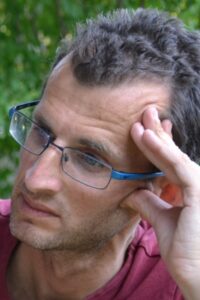
Hugo Emmerzael is a film critic, curator and public speaker based in Amsterdam. He is an editor of the Filmkrant, the Netherland’s leading independent film magazine, and writes for MUBI Notebook and Filmmaker Magazine, among other outlets. A member of FIPRESCI, he has sat on juries at Cannes and Venice, as well as Rotterdam and Karlovy Vary. He also serves as Deputy Digital Editor of Pardo, Locarno’s official daily magazine, and edits the festival magazine of GAIFF in Yerevan.

Day 3 – Memory, Truth, Freedom

Film: Man of Marble

A young filmmaker sets out to uncover the fate of Mateusz Birkut, a once-celebrated bricklayer who became a socialist icon during Poland’s Stalinist era before disappearing from public life. As the investigation unfolds through archival footage, interviews, and official records, the gap between state propaganda and lived experience becomes increasingly apparent. Blending political inquiry with self-reflection, Man of Marble is both a gripping mystery and a landmark critique of power and historical mythmaking. Andrzej Wajda’s masterpiece captures the complexities of postwar Poland while affirming cinema’s ability to challenge official narratives and recover forgotten lives.

Conversation: Reflections on propaganda and truth

The conversation will focus on how the propaganda is portrayed in Wajda’s film as a manipulative, myth-making machine. How sharply it may, and usually does, contrast with the reality, bringing a sense of disillusionment and betrayal once unmasked. Wajda demonstrates how easily filmmakers, and the state officials could produce documentaries to serve political purpose. And that was a long time before AI generated content. A very current topic!

Guests: Katarzyna Ślesicka & Prof. Kris van Heuckelom

Katarzyna Ślesicka is the Deputy Director of the Wajda Film Centre in Warsaw, where she also heads the film education department. She co-created Doc Lab Poland, one of the country’s largest programmes supporting documentary filmmakers, and founded LET’S DOC, Poland’s only documentary festival dedicated to young audiences. A producer with more than forty film credits, she spent a decade as Executive Director of the Wajda School Foundation and Wajda Studio before taking up her current role.

Prof. Kris van Heuckelom has lectured Polish Literature and Culture at KU Leuven since 2006, with research ties to the universities of Warsaw, Cracow and Chicago. His work focuses on migration, mobility and identity in Central European film and literature. He is the author and editor of several books, including European Cinema after the Wall: Screening East-West Mobility, and has translated the poetry of Czesław Miłosz and the letters of Bruno Schultz into Dutch.

Moderator: Ianthe Mosselman

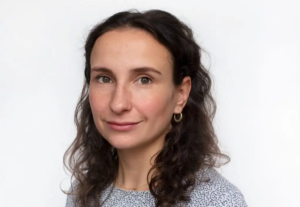
Ianthe Mosselman is the Senior editor and Program Maker Art, Literature, at De Balie. She studied Comparative Dutch Studies in Amsterdam and Berlin. She creates programs about art, literature, and culture, and over the past few years, she has interviewed various national and international writers on the stage of De Balie. She has also worked for the European Press Prize. She believes that art doesn’t need to serve a purpose, that conversations should be challenging, and that there should be more space for women in public debate. Additionally, she thinks that we should cherish beautiful things, which is why she has been organizing the Conversation Before the Dam and programs about forgotten literary works for years.

Film: Man of Iron

It is August 1980, in the Gdańsk shipyard the strikes had just begun. Man of Iron follows a disillusioned journalist assigned to discredit Maciej Tomczyk, a prominent worker and opposition activist. As he pieces together Tomczyk’s story, his own assumptions begin to unravel, reflecting the profound social and political transformation unfolding across Poland. Interweaving fictional characters with historical figures and using documentary footage, Andrzej Wajda creates a portrait of solidarity, courage, and the struggle for freedom. Awarded the Palme d’Or at the 1981 Cannes Film Festival, Man of Iron stands as a political drama and an enduring testament to the power of collective action.

Day 4 - Art against Oppression

Film: Afterimage

The film is inspired by the life of one of Poland’s most influential modernist artists in postwar Poland, a renowned avant-garde painter Władysław Strzemiński. Having refused to subordinate his art to the demands of Socialist Realism, he opposed the Stalinist regime. Stripped of his position, livelihood, and public visibility, Strzemiński struggled to preserve his artistic integrity in the face of relentless political persecution. Afterimage, Andrzej Wajda’s final film, is a moving meditation on creative freedom, moral conviction, and the devastating consequences of ideological control. Dignified and deeply humane, it is a poignant farewell from one of cinema’s greatest masters.

Conversation: A clash between art and politics

Why was abstract art so passionately hated by totalitarian systems? And why many artists having the misfortune to live in one still insisted to create abstract visions and objects? This conversation will bring the life and work of a brilliant, uncompromised Polish artist, Wladyslaw Strzemiński to the spotlight. It will explain the circumstances under which he pursued his artistic ideas and how he influenced the development of 20th-century European art.

Guests: Anda Rottenberg & Matt Steinglass | Moderator: Ianthe Mosselman

Anda Rottenberg is a Polish art historian, curator, writer, and public intellectual. A leading figure in contemporary art, she served as Director of the Zachęta National Gallery of Art in Warsaw from 1993 to 2001, where she played a key role in expanding the institution’s international profile. She has curated numerous exhibitions in Poland and abroad, published extensively on art and culture, and authored acclaimed memoirs. Through her curatorial practice, writing, and institutional leadership, Rottenberg has made a lasting contribution to the development and international recognition of contemporary art in Central and Eastern Europe.

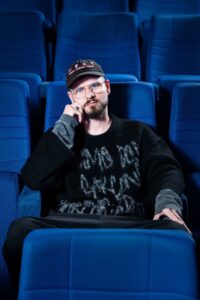
Matt Steinglass is the Europe correspondent for The Economist. After growing up in Washington, DC, he studied Russian history and literature at Harvard and interactive telecommunications at New York University. He wrote dozens of scripts for children’s cartoons (including the series “Arthur”) before becoming a journalist. He has lived in and reported from Togo, Vietnam, Britain and the Netherlands. Before joining the Economist in 2014 he was Netherland’s correspondent for the Financial Times. His current beat includes central and eastern Europe, Scandinavia, and pan-European issues. His paternal family hails from Warsaw, where the name Steinglass can be traced back to the late 1700s.

Day 5 - Wajda’s Legacy

Documentaries from The Wajda School

Wajda School is one of Europe’s leading institutions for the development of emerging filmmakers. Founded in Warsaw in 2002 by Andrzej Wajda and Wojciech Marczewski, it offers project-based training that combines artistic mentorship with hands-on film production. Rather than teaching the basics of filmmaking, the School supports directors, screenwriters, producers, and documentary filmmakers in developing their own projects under the guidance of acclaimed industry professionals. Through its close collaboration with Wajda Studio, many projects developed at the School have gone on to premiere and receive awards at major international film festivals, establishing Wajda School as a vital incubator for contemporary Polish cinema.

Festival Partners and Sponsors

Amsterdam Polish Film Festival is organized by Polish Culture NL in cooperation with De Balie and co-sponsored by AFK, Cultuurfonds, Embassy of the Republic of Poland in The Hague and Polish Tourism Organization

The film copies and screening rights are sourced from the WFDiF’s collection and Akson Studio